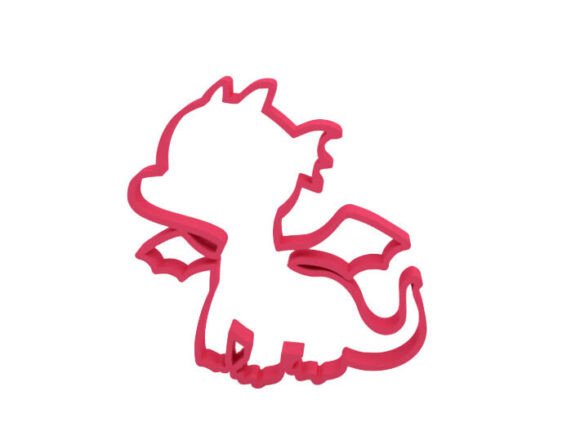
Cookie Cutter for 3D Printing: A Practical Guide to Customization and Creativity
Whether you're a hobbyist, a small business owner, or an educator, the concept of a cookie cutter for 3D printing offers a unique blend of simplicity and innovation. Unlike traditional cookie cutters used in baking, this digital tool is designed to create custom shapes and patterns that can be printed using 3D printers. The file format commonly used for this purpose is .stl, which stands for stereolithography. This file type is widely supported by most 3D printing software and hardware, making it a go-to choice for designers and creators alike.
Understanding What a Cookie Cutter for 3D Printing Is
A cookie cutter for 3D printing isn't a physical object you place on a baking sheet. Instead, it's a digital design that you can download, modify, and print using a 3D printer. These designs often feature intricate patterns, geometric shapes, or even personalized logos that can be replicated multiple times with precision. The key difference between a traditional cookie cutter and its 3D printing counterpart is that the latter allows for endless customization and scalability.
For instance, if you're running a small bakery and want to create unique cookie shapes for special occasions, you could use a 3D-printed cookie cutter to produce custom designs without the need for expensive molds. Similarly, educators might use these tools to teach geometry or design principles in a hands-on way, allowing students to see how digital models translate into physical objects.
Where and When to Use a Cookie Cutter for 3D Printing
The versatility of a cookie cutter for 3D printing makes it useful in a variety of settings. For example, during the holiday season, a baker might use a 3D-printed cookie cutter to create themed shapes like snowflakes, stars, or even miniature Christmas trees. In a professional setting, a product designer could use a similar approach to prototype packaging or decorative elements for a new line of goods.
Another common use case is in the realm of personal projects. Imagine a DIY enthusiast who wants to create custom jewelry or home decor items. By downloading a cookie cutter design from an online platform, they can easily print out a template and use it as a guide for handcrafting their own pieces. This not only saves time but also allows for greater creative freedom.
Real-World Applications Across Different Fields
Let’s explore some practical scenarios where a cookie cutter for 3D printing can make a real difference:
- Personal Use: A parent might design a custom cookie cutter shaped like their child’s favorite cartoon character to make special treats for a birthday party.
- Commercial Use: A small business owner selling handmade soaps or candles could use a 3D-printed cookie cutter to create uniform shapes that enhance the visual appeal of their products.
- Educational Use: A teacher might incorporate 3D-printed cookie cutters into a lesson on geometry, helping students understand concepts like symmetry, volume, and surface area through tangible examples.
- Artistic Use: An artist could use a cookie cutter for 3D printing to create a series of sculptures or installations based on recurring motifs, adding a layer of consistency and cohesion to their work.
What to Consider Before Using a Cookie Cutter for 3D Printing
Before diving into the world of 3D-printed cookie cutters, there are several factors to keep in mind. First, ensure that the .stl file you choose is compatible with your 3D printer. Not all printers support the same file types, so it's important to check specifications before downloading. Additionally, consider the material you'll be using for printing. Some materials may be more suitable for creating durable cutters than others.
Another consideration is the size and complexity of the design. A highly detailed cookie cutter may require more time and resources to print, which could impact the overall efficiency of your project. It's also worth exploring whether the design is open-source or requires a license, especially if you plan to use it commercially.
How to Get Started With a Cookie Cutter for 3D Printing
If you're new to 3D printing, getting started with a cookie cutter can be a fun and rewarding experience. Begin by searching for free or affordable .stl files on platforms like Thingiverse, MyMiniFactory, or GrabCAD. Once you've found a design you like, download the file and open it in your preferred 3D printing software to adjust any parameters, such as scale or orientation.
After preparing the file, load it into your 3D printer and begin the printing process. Depending on the size and detail of the design, this could take anywhere from a few minutes to several hours. Once the print is complete, you can test the cookie cutter by using it to shape clay, wax, or other malleable materials. This trial-and-error process helps you refine your technique and improve the quality of future prints.
Benefits for Different Users
The benefits of using a cookie cutter for 3D printing vary depending on the user's needs and goals. For example:
- Hobbyists: Can experiment with new designs and create one-of-a-kind items without the cost of traditional manufacturing.
- Entrepreneurs: Can quickly prototype and test new product ideas, reducing the time and expense associated with conventional production methods.
- Students: Can apply theoretical knowledge to real-world projects, enhancing their understanding of design, engineering, and technology.
- Artists: Can expand their creative possibilities by incorporating 3D-printed elements into their work, opening up new avenues for expression.
Conclusion: Embracing the Possibilities of 3D-Printed Cookie Cutters
Whether you're looking to simplify a task, add a personal touch to your creations, or explore the potential of 3D printing, a cookie cutter for 3D printing offers a practical and versatile solution. By understanding the applications, considerations, and benefits of this tool, you can unlock new opportunities for creativity, efficiency, and innovation in your projects. With the right mindset and resources, anyone can harness the power of 3D printing to bring their ideas to life—whether in the kitchen, the classroom, or the workshop.